
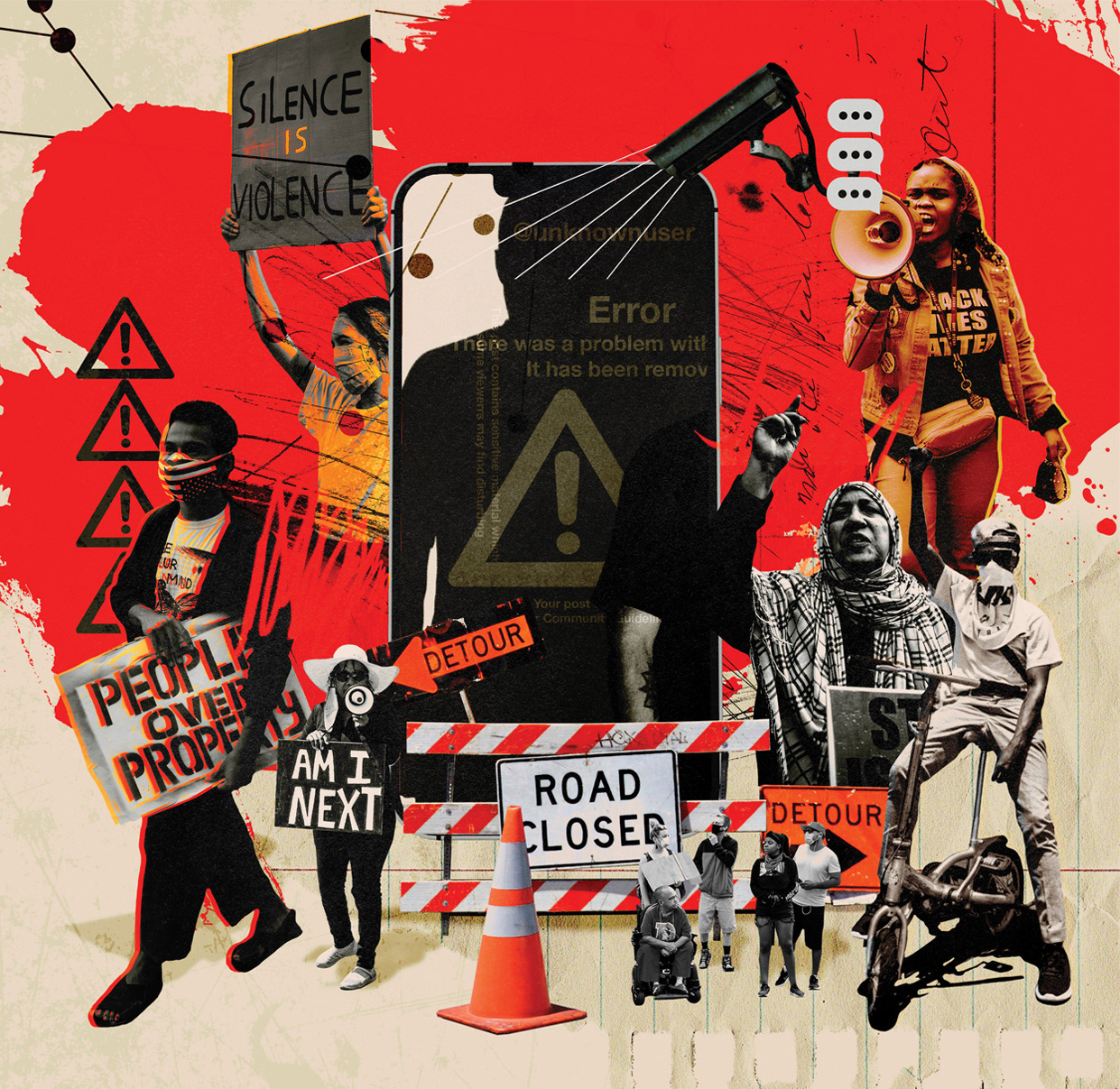
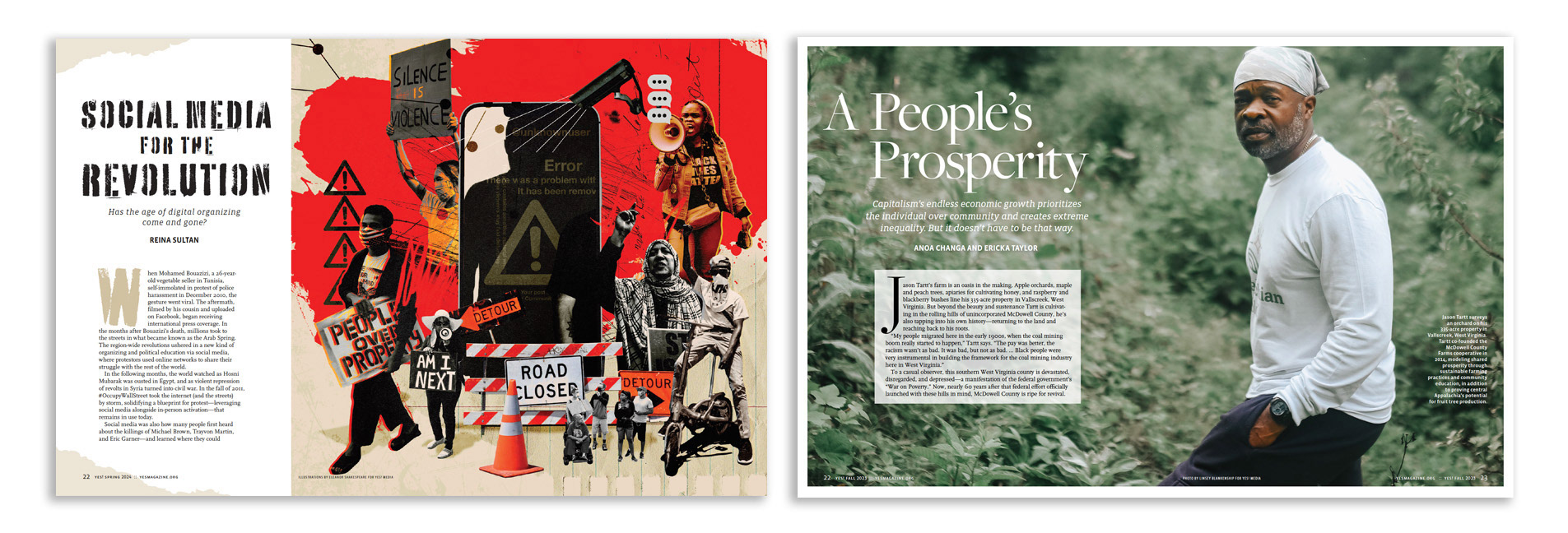
I commissioned and art-directed this artist for her ability to visually communicate complex, multi-layered ideas central to the issue’s theme. [Illustration by Eleanor Shakespeare for the Connections issue.]
YES! Media
Role: Art Director
The Challenge
YES! Magazine’s quarterly production cycle evolved under new editorial leadership, requiring design operations to adapt to a more phased, collaborative workflow amid tightening art and production budgets, while maintaining quality, consistency, and reliability.
My Responsibilities
I partnered with the executive editor to identify design, production, and material compromises that maintained visual storytelling, design quality, and environmental responsibility while staying within budget. I also led the design-side implementation of a restructured editorial workflow, developing systems, templates, and production practices to support it at scale.
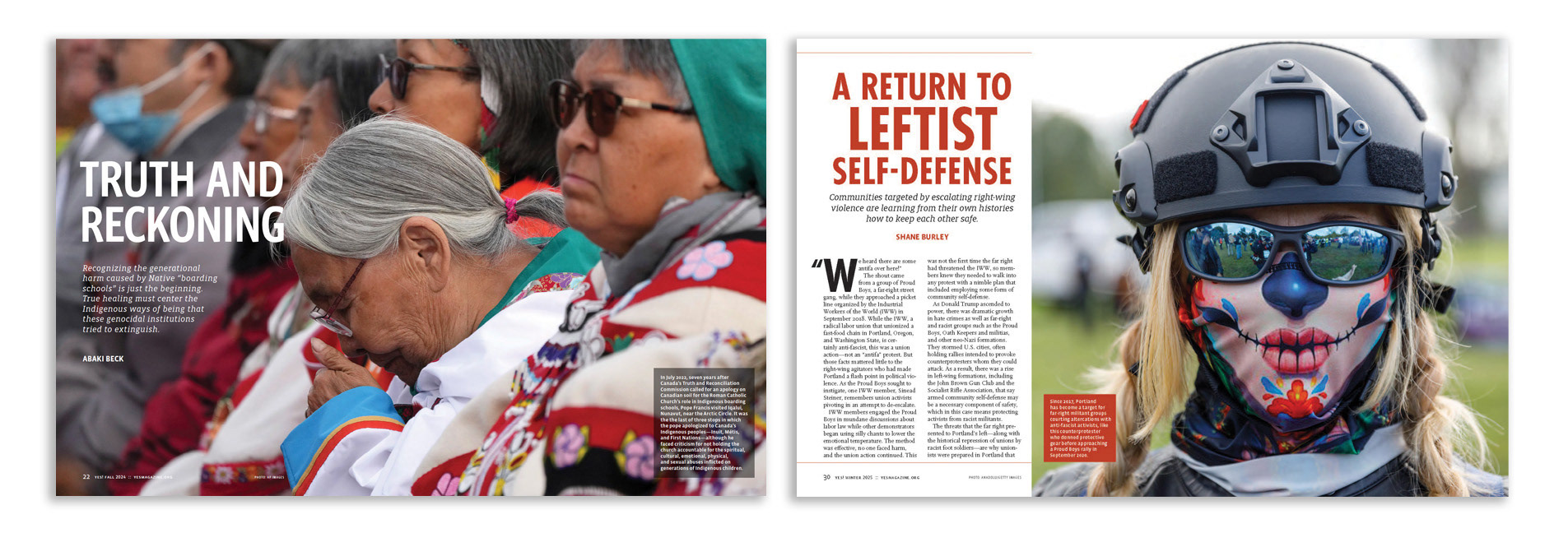
Strategic use of stock photography to establish emotional tone and narrative connection within strict budget and production constraints.
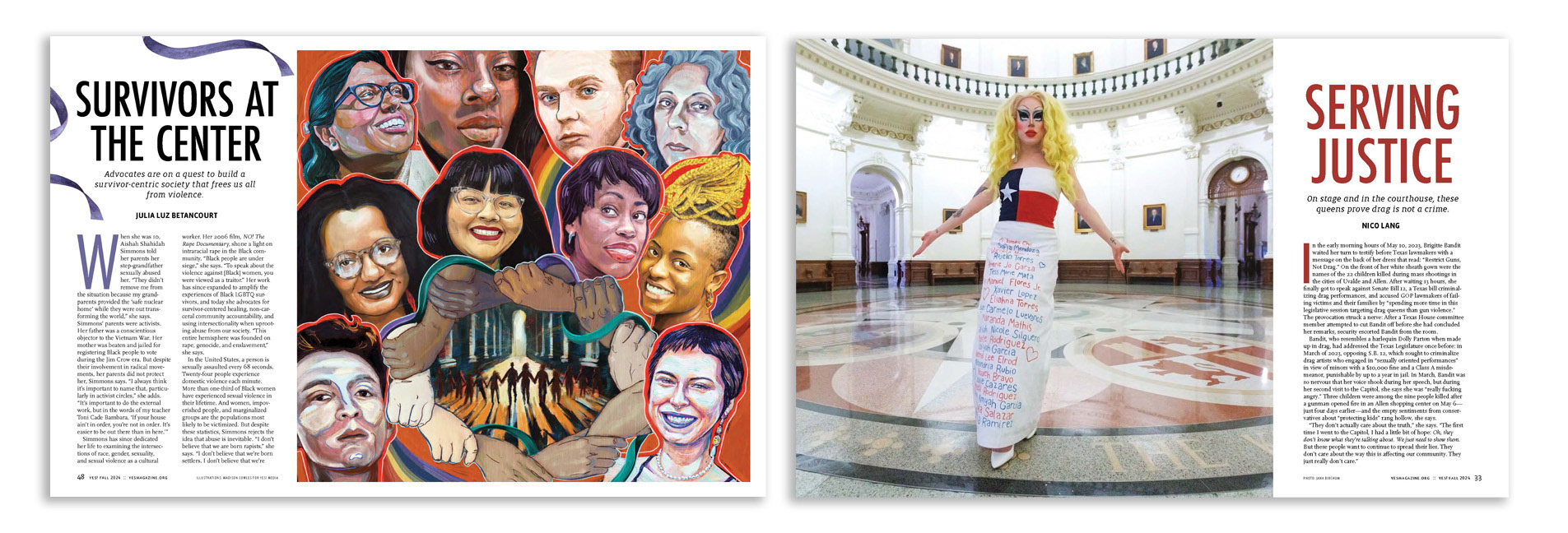
Commissioned illustration or photography is used selectively when complex editorial concepts require personal connection, visual clarity, or a metaphor that justifies the added cost.
Researched, sourced, and licensed existing artwork as a cost-conscious alternative, prioritizing subject-matter alignment, authenticity, and rights compliance.
Key Contributions
> Developed and refined layout templates, file structures, and versioning practices to support phased content delivery
> Adjusted art sourcing and usage strategies to align with shrinking budgets without compromising visual clarity
> Established design production workflows that reduced last-minute fixes and production risk
> Coordinated closely with editorial, development, and operations teams to clarify handoffs and expectations
> Trained and supported design staff in print production standards and editorial collaboration
The Outcome
> Enabled consistent, on-time delivery of a 72-page quarterly magazine under an evolving editorial model
> Maintained visual quality and editorial cohesion despite reduced creative resources
> Improved design accuracy, predictability, and cross-team coordination
> Reduced production strain during periods of staffing change